
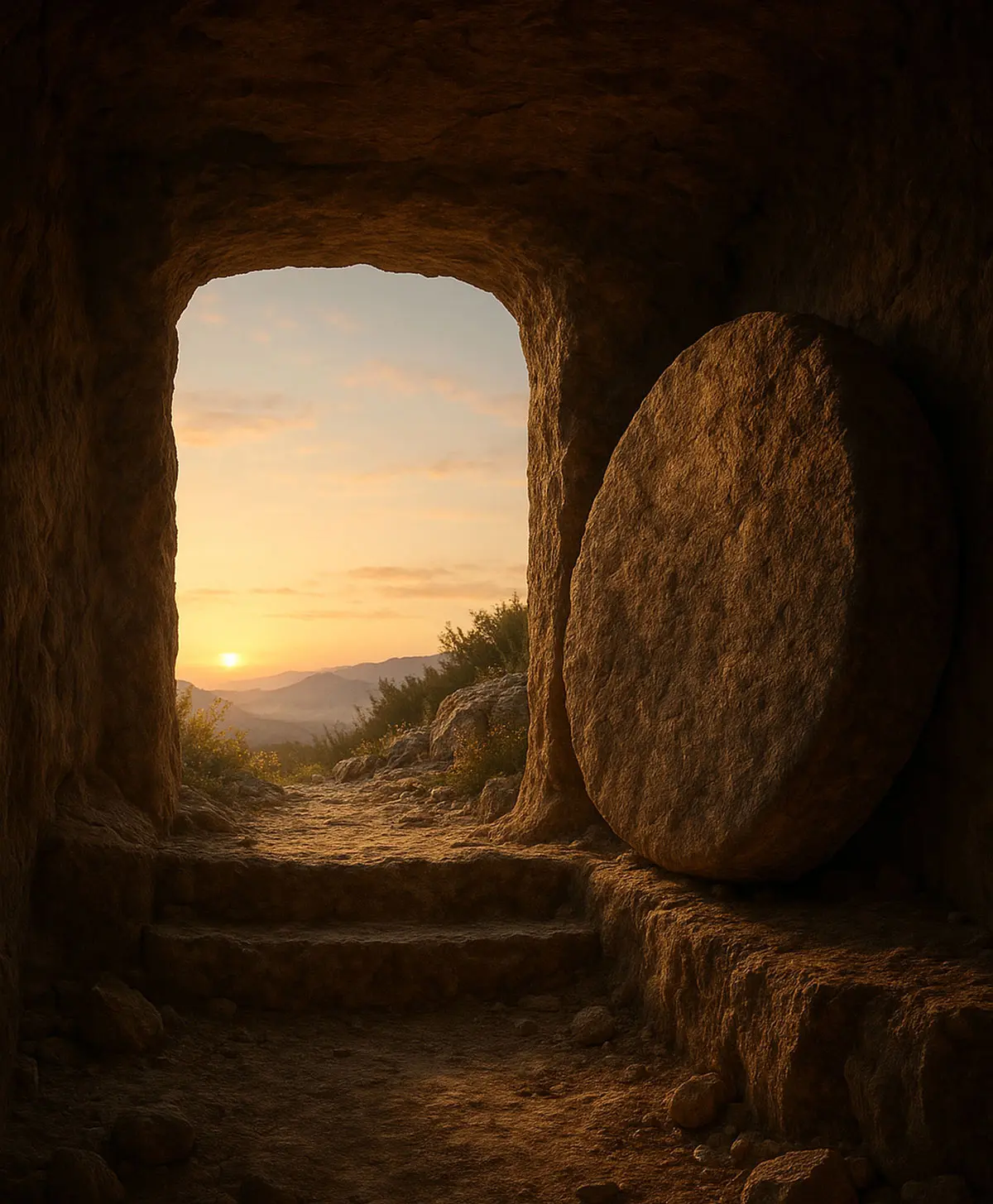
Using the Gospel of Easter Sunday (John 20:1–9) for our reflection, three people come to the empty tomb: Mary of Magdala, Simon Peter and the Beloved Disciple. They all loved Jesus, but they were traumatized by his crucifixion and death. As they grieve and mourn, they receive upsetting news—the body of Jesus is no longer in the tomb. They are in shock: one weeps, one stands in disbelief and puzzlement, and one “sees and believes.”
The empty tomb came to symbolize their loss. “Who are we without Jesus in our lives?”—a question that concerned them, the early Christian community and still speaks to us today. As we continue reading the Gospel of John, the resurrected Jesus appears first to Mary of Magdala. He asks her, “Why are you weeping?” and she shares her story. Then Jesus says her name, “Mary,” and her eyes and heart are opened. It is Jesus, her beloved “Rabbouni.”
Later that Easter day, the risen Jesus appears to his disciples and greets them, “Peace be with you,” showing them his hands and side. They rejoice, and he gives them the Holy Spirit and the power to forgive. In both encounters, the relationship changes. Their love for Jesus calls them to a deeper faith. It is no longer about Jesus performing “signs” for them, but about Jesus working in and through them by the power of the Holy Spirit. This is reflected in Thomas’ declaration, “My Lord and my God.” In a sense, they are saying, “You are the one I love and the one in whom I believe.”
That is the gift we have received from Jesus at our baptism. We breathe in what Jesus breathed out—the Holy Spirit. Just as God formed humanity from the clay of the earth and breathed into it the breath of life, so Jesus breathes the breath of eternal life into us and we become a new creation.
Easter is a story of transformation. Its message of hope, faith, and love is an antidote to the daily reminders of despair, fear and hatred in our world. As one commentator put it, “May we, like the disciples, come running to the Lord with all we have and find ourselves witnesses to his Resurrection.”